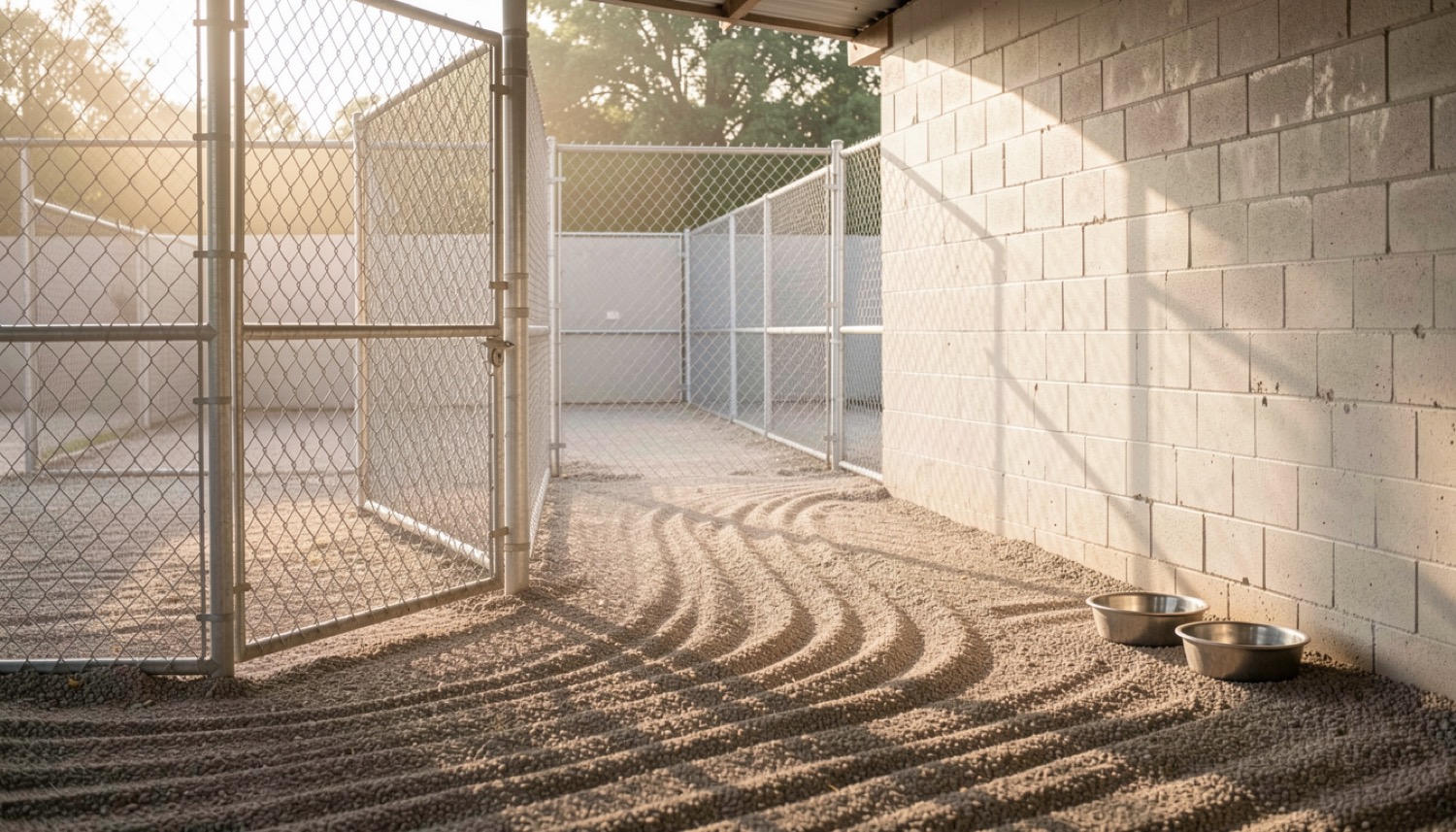
A Belgian shepherd waiting in a kennel needs daily structured movement, mental work that ends in rest, and a routine it can predict. A foster home has to supply the same three things, plus the time to learn the individual dog. Nothing about the breed makes a short stay easy, and nothing about a foster season fixes a dog that was never taught to settle.
What does a Belgian shepherd need while it waits in a kennel?
Kennel time is not empty time for this breed. The dog still needs to move, and it needs to move in a way that has a beginning and an end. Two or three short sessions a day beat one long run: a walk with changes of pace, a few minutes of obedience or nose work, then a clear stop. Belgian shepherds, Tervueren and Malinois especially, learn the order of the day quickly. If the order is always the same, the dog spends less energy watching the gate.
Mental work matters more than distance. A dog that has solved something, a food puzzle, a short tracking line, a few positions on a quiet path, comes back to the kennel calmer than a dog that has only run. Physical exercise without a task tends to wind this breed up rather than settle it.
Rest has to be taught, not assumed. Many dogs in kennels sleep badly because the environment never signals that the day is over. A covered run, a fixed quiet hour, and no traffic past the kennel in that hour do more than an extra walk.
Human contact should be regular but not constant. A dog that gets attention every time someone passes learns to demand it. Scheduled contact, same person where possible, same order of events, gives the dog something to rely on without turning every footstep into a trigger.
Health basics belong on the kennel list too. Fresh water at all times, a raised cot or dry bedding, shade in summer, and a check of paws and coat after exercise. For a coated variety, a few minutes of brushing several times a week keeps the undercoat from matting and gives the dog a reason to stand still for handling.
If you are trying to read the breed's rules and paperwork before you take one on, a German-language magazine such as the Saargold Belgian shepherd magazine covers the four varieties, the working tests and the local requirements in the Saarland, which is useful when a dog arrives with documents you cannot yet read.
How much work does a Tervueren ask for in a foster season?
A foster season is usually three to six months. Plan for two hours a day of your own time, split into two or three blocks, and one full day a week where the dog is not left alone for more than a couple of hours. That is the honest figure for a Tervueren that has been kennelled and needs to learn house rules.
The first two weeks are the heaviest. The dog is testing floors, stairs, doors, cars and silence. You will lose time to supervision: a Tervueren that is bored will find the sofa, the bin or the cat. Crate or pen training, done slowly and with food, saves more time than it costs.
Weeks three to six are for routine. Same walk times, same feeding times, same place to sleep. Add one new thing at a time: a bus ride, a cafe, a visitor. If the dog cannot recover within an hour, the step was too big.
From week six onward the work shifts to the dog's weak points. Leash manners, being handled by a vet, waiting while you talk to someone. A Tervueren that has learned to wait is a different animal to live with.
Grooming is part of the weekly count. The Tervueren coat needs brushing two or three times a week and more when the undercoat blows. Nails, ears and teeth are short jobs but they are jobs.
What a foster season does not do is finish the dog. You are not producing a trained sport dog in six months. You are producing a dog that can live in a house, be left for a normal working day, and be handed to someone else without the behaviour falling apart. Say that out loud before you start, because the next home will inherit whatever you skip.
Which checks belong to the breed before a placement is agreed?
Before a Belgian shepherd moves from a kennel to a foster or permanent home, four groups of checks belong on paper.
Identity and origin. Microchip, vaccination record, and any pedigree or breeding book number the dog has. For this breed the four varieties are registered separately in some systems, so check that the variety on the paper matches the dog in front of you.
Health screening. Hip and elbow results if they exist, and a current veterinary examination covering teeth, ears, eyes, skin and weight. A dog that has been kennelled for months often arrives underweight or with overgrown nails. Get the baseline in writing so the next home is not guessing.
Behaviour history. What the dog does around other dogs, children, livestock and traffic. Kennel staff see a different dog than a foster home does, so ask both. If the dog has bitten or has a bite history, that belongs in the handover, not in a conversation later.
Working and training record. For a herding breed, note what the dog has done: basic obedience, any BH or IGP preparation, agility level, or none of it. A dog with no training record is not a problem, but the foster home needs to know it is starting from zero.
Agree on who pays for what before the dog arrives. Food, vet care, insurance and any training classes. In Germany, dog tax and liability insurance are handled locally, and the rules differ by municipality, so the foster home should confirm its own position rather than assume the rescue covers it.
What a foster home has to provide, in plain terms
A secure garden or a reliable leash routine. This breed can clear a low fence and will test one.
A crate or pen, introduced with food and never used as punishment.
Two walks a day minimum, one of them long enough to include training.
A quiet place to sleep away from the front door.
Time for grooming, and a brush that reaches the undercoat.
A vet you have already spoken to, so the first visit is not an emergency.
A plan for the first ten days that does not include visitors, travel or new dogs.
When the foster season ends
Write a handover note. What the dog eats, when it sleeps, what frightens it, what it has learned, what it still cannot do. Include the vet records and the microchip number. A one-page note prevents most returns.
If the dog is not ready for a permanent home at the end of your season, say so. Extending a foster placement is cheaper than a failed adoption. The breed does not reward optimism; it rewards consistency, and a second move is harder on the dog than a longer stay with someone who already knows the routine.