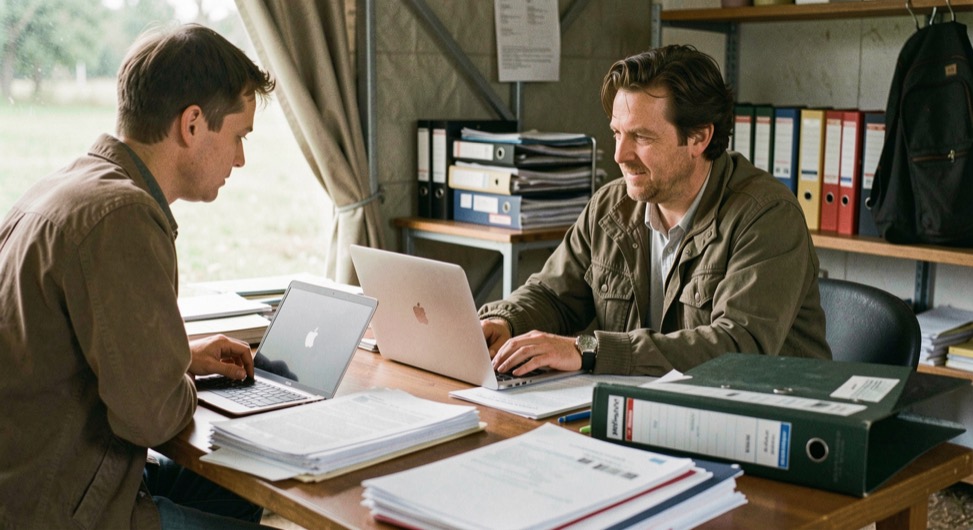
Shelters are drowning in offers to walk dogs and starved of people who can do a payroll, write a policy, chase a grant deadline or fix a booking form. The work that keeps a shelter alive is mostly administrative, mostly invisible, and mostly done badly at ten at night by someone whose actual job is animal care. If you have an office trade, it is the rarest thing you can give.
The trades shelters lack
The pattern is consistent across small charities: everything that is not the mission itself is done by whoever is left. That produces predictable gaps.
| Trade | What it fixes | Why it is missing |
|---|---|---|
| Bookkeeping and accounts | Records, filings, the annual return | Done in arrears by a trustee, and the deadline is real |
| Grant writing | Applications that are currently not submitted at all | Takes uninterrupted hours nobody on site has |
| Web and forms | Adoption enquiries that vanish, listings that are out of date | The site was built by a volunteer who left |
| Photography and copy | Profiles that do not describe the dog | Written at the end of a shift, by someone exhausted |
| Human resources and policy | Volunteer agreements, safeguarding, incident procedure | Nobody wants to write it until an incident forces it |
| Data and reporting | Knowing how long dogs actually stay, and why | The information exists in a spreadsheet nobody analyses |
| Translation | Transport paperwork and foreign rescue partners | Paid for, or done with a machine and hoped for |
Notice what is not on that list: strategy, rebranding, and advice. Shelters receive a great deal of advice. What they lack is somebody who does the task and hands back a finished thing.
Offering without burdening
An unclear offer creates work. Let me know if I can help with anything puts the burden of inventing a job on the person who has no time to invent one, which is why so many generous offers are never answered.
Offer a specific, finished deliverable, with a size and a date. Compare the two versions of the same email. I am an accountant, happy to help if you ever need anything. Against: I am an accountant. I can put your last twelve months into a clean set of accounts and give you a one page summary, working from whatever you have, and I would need about six hours over two weeks. Would that be useful, and who should I talk to?
The second version can be answered with one word. It also tells the shelter what it is committing to, which matters more than people realise: taking on a volunteer costs a manager time, and a professional who disappears halfway through the accounts leaves the charity worse off than before.
Three other things to say up front. Whether you need access to sensitive data, because that requires a decision rather than a favour. Whether your work needs to be checked or signed by someone qualified. And when you will stop, so that the shelter knows this is a project and not a person they can rely on forever without asking.
What pro bono work looks like
Done properly, this is professional work delivered to a client who cannot pay, with the same discipline you would apply to one who could. That means a scope, a handover, and documentation.
- Agree the scope in writing, even informally. One paragraph in an email is enough, and it prevents the slow expansion that kills these arrangements.
- Work with their tools, not yours. A brilliant system nobody at the shelter can open is a liability the day you stop.
- Write the instructions. Every deliverable ends with a page explaining how to repeat it. This is the difference between a gift and a dependency.
- Keep the data inside their systems. Adopter and donor details are personal data, and a spreadsheet on your laptop is a problem for them, not for you.
- Do not sign what you are not qualified to sign. Helping prepare accounts is not the same as certifying them, and the boundary protects both sides.
- Hand back on the agreed date. Even if you intend to continue, close the first piece formally so that both sides can choose to go on.
The most valuable deliverable in almost every small shelter is not the work itself, it is the written procedure that lets a non specialist repeat it next year. Anyone can do the task once. Very few volunteers leave behind a page that means the task survives them.
The one hour a week version
If a project is too much, a fixed hour is more useful than an open offer, because it can be scheduled. An hour a week, on the same day, is enough to run the adoption inbox, keep the listings current, chase vaccination reminders, reconcile a bank feed, or turn the week's walking notes into profiles that describe the dog.
Pick one of those and own it completely. Owning the inbox for a year means the enquiries are answered within a day, every day, which is worth more to a shelter's adoption rate than most fundraising. Owning the listings means dogs disappear from the site when they are adopted, which is the single most common complaint the public makes.
Two practical notes. Do it remotely if that is what makes it sustainable; the objection that volunteering must happen on site is what excludes the people whose skills are hardest to replace. And put your hour in the shelter's calendar rather than your own, so that when you stop, the gap is visible and can be filled.
An hour a week for a year is how most people end up running something, which is the road described in growing from volunteer to coordinator. If your trade is physical rather than administrative, the same reasoning applies to the repairs a shelter never gets to.