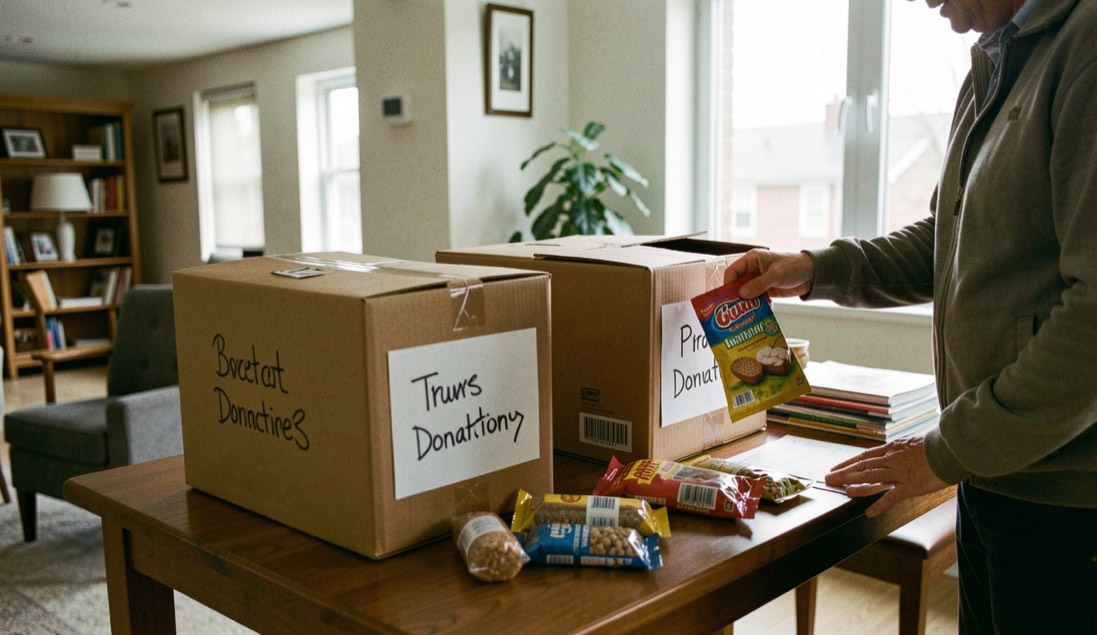
A Christmas food drive fills a store room in December and empties it by February, and the shelter still has to buy bin bags in June. What changes a shelter's year is not a large gift, it is a small predictable one, and the smallest structure that produces a predictable gift is one person on one street collecting on the same day each month.
Why standing beats seasonal
Shelters budget against expected income. Anything that arrives once cannot be budgeted; it is absorbed, it is welcome, and it changes nothing structural. Anything that arrives every month can be planned against, which means the money that would have bought those items is committed elsewhere, usually to veterinary care.
Seasonal drives also arrive when the shelter is least able to handle them. December brings volume, volunteers on holiday, and a store room that is already full, so a proportion of a large drive is stored for months or quietly discarded. A monthly box arrives on a known day, is unpacked in ten minutes, and goes straight onto the shelf it belongs on.
There is a third effect, which is why shelters ask for this and rarely get it. A standing collection makes a neighbourhood aware of a shelter twelve times a year rather than once. Fosters, walkers and adopters come out of that awareness far more often than they come out of an appeal.
Building the neighbours list
Start smaller than feels worthwhile. Twelve households that participate every month is a functioning collection; sixty households that participate once is an event you will not repeat.
- Ask the shelter first. Confirm they want this, get the current list of what they need, and get a named contact. A collection nobody at the shelter knows about arrives as a surprise, which is the one thing you are trying to avoid.
- Write one short note. What the shelter is, three or four items it always needs, where to leave things, which day, and how to stop receiving the note. Nothing emotive, no photographs of suffering animals, no fundraising language.
- Deliver it by hand to your own street. A note through a door from a neighbour with a name works; the same note in a local group from a stranger does not.
- Keep a list of who takes part. Names and doors, nothing more. This is the asset, and it grows by one or two a month for years.
- Report back once, briefly, after the first delivery. What went, what the shelter said. People give again to something that visibly arrived.
Keep the ask small and specific. One pack of kitchen roll or a bag of dry food, on the last Saturday of the month is answerable in a second. Anything you can spare produces the shelf of things nobody can use, and puts the sorting on you.
The drop point and the rhythm
The drop point is the whole logistics of the operation, and it should be as boring as possible: your own porch, a box in a garage, a crate by a gate. It has to be reachable without asking, coverable against rain, and visible enough that people remember it exists.
| Rhythm | How it runs | The cost to you |
|---|---|---|
| Open box, one delivery a month | Neighbours drop things whenever; you deliver on a fixed day | Lowest effort, some sorting, occasional odd donations |
| Collection weekend | The box is out for two days only, then goes | More reminding, much less sorting, easiest to sustain |
| Doorstep round | Neighbours leave a bag out, you walk the street | The highest participation and the highest effort |
Whichever you choose, never change the day. The value of the whole thing is that people do not have to think about it, and a collection that moves around loses half its households within three months. One reminder, two days before, is the only maintenance a working collection needs.
Set two rules out loud from the start: nothing perishable and nothing opened. It saves you the conversation about the half used bag of food, and it protects the shelter from a donation it would have to bin.
The monthly delivery
Sort before you drive. Group by category, keep food separate from cleaning products, and put anything you are unsure about in its own bag with a note. Deliver at the hour the shelter told you, and tell them a day ahead that you are coming.
Ask for the current list every single month, and say so to your neighbours. Needs move: a shelter with a parvovirus outbreak needs disinfectant and nothing else, a shelter with a litter needs puppy food it never normally uses, and a shelter that has just been given a pallet of dry food needs anything except dry food. A collection that adjusts is worth several times one that repeats the same box.
Finally, know what a collection cannot do. It cannot pay a veterinary bill, and it does not replace money. If your street wants to do more, ask the shelter whether a small standing donation would help more than goods, and let them answer honestly. Goods are the right gift when the list says so, which is the entire point of reading a wish list before you buy, and one of the households on your list will turn out to have a trade the shelter needs more than the box.