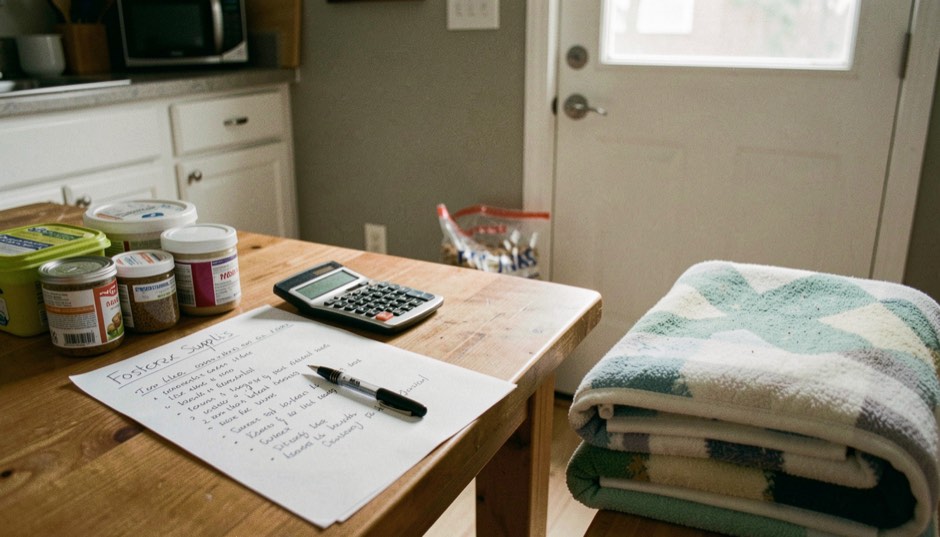
Fostering sounds free because the shelter pays the vet. The rest of the bill is quieter and mostly yours: the food, the fuel, the extra laundry, the chewed skirting board, the Saturday spent at a vaccine appointment. Costing that out before you say yes is not cold. It is the arithmetic that makes the yes hold for a whole month rather than a brave first week.
What the shelter usually carries
Every arrangement differs, and the difference is the point of asking. In the commonest pattern the shelter pays for veterinary care and prescribed medication, provides a starter kit of food and bedding, and lends a crate if it has one. Almost everything with a weekly rhythm lands on you: the food after the starter bag, the fuel to and from the shelter, the washing the foster dog generates, and the small equipment nobody thinks to supply, like a stair gate or a second lead.
Ask for the split in writing before the dog arrives, not after the first receipt. The version of this ledger drawn up for adoption rather than fostering is published in French by the finance guide Fleurdelage, which ran a worked first year pet budget this September; the categories it lists are the same ones a foster month contains, simply shorter.
The weekly costs nobody lists
| Line | What it covers | Why it surprises people |
|---|---|---|
| Food | Daily feeding of the dog, at the shelter's brand if possible | A large dog eats more than the starter bag suggests |
| Fuel and parking | Runs to the shelter, the vet, the collection point | Two short trips a week is a tank a month |
| Laundry and cleaning | Bedding, towels, enzyme cleaner, machine cycles | A foster doubles the household's laundry for weeks |
| Enrichment and chews | The toy that survives, the long lasting chew | Boredom is expensive in other ways |
| House wear | Skirting boards, garden corners, a replaced slipper | Nobody budgets it; everybody meets it |
| Your own animals | An extra check up, a spare room rearranged | The resident cat does not sign the foster form |
None of these lines is large. The surprise is that they are weekly, they are yours, and they do not stop when the dog is quiet. A foster who has written the list down does not discover it in week three.
The costs that are not money
The larger half of the bill is not denominated in currency at all. A foster dog costs sleep in the first fortnight, while it learns the house. It costs your mornings, moved earlier for the walk before work. It costs your own animals a share of their home, and it costs the part nobody prices: the attention that a slightly uncertain dog needs in the evening.
Time is the line to be honest about. A dog alone too long is not fostered, it is stored, and the question of how many hours the house is empty is the first one a good coordinator asks. The reference for the money side is the PDSA's cost of owning a dog, a vet charity's standing breakdown of what a dog's ordinary life costs; read it for the figures and then halve the duration for a foster month.
A budget that survives month two
Write the figure as a monthly number, not a first week number. The opening days carry one off costs, a lead, a gate, a food change, and they are not the ones that break the arrangement. The line that matters is what the fourth ordinary week looks like, and whether your budget absorbs it without noticing.
Test the figure before the dog arrives: put the monthly estimate aside for one month. If it hurt, foster a smaller dog or a shorter stay. If it did not, you have paid for the foster in advance, which is the calmest way to begin.
When the arithmetic works, the paperwork follows: the registration, the narrow offer, the spare room, all covered in becoming an emergency foster. When it nearly works, a shorter commitment still helps, and the season long foster explains the deeper version. And when the ledger honestly says no, the answer is not guilt: the gestures short of fostering are what keep the shelter open while the budget is not yours to spend.
The honest limit
A budget does not make fostering easy; it makes it survivable. The dog will still wake you at night and still need to go back, and no spreadsheet softens either. What the ledger buys is the ability to say yes again next quarter, which is what a shelter actually needs from its fosters: not one heroic placement, but a household that can do this twice a year for a decade.