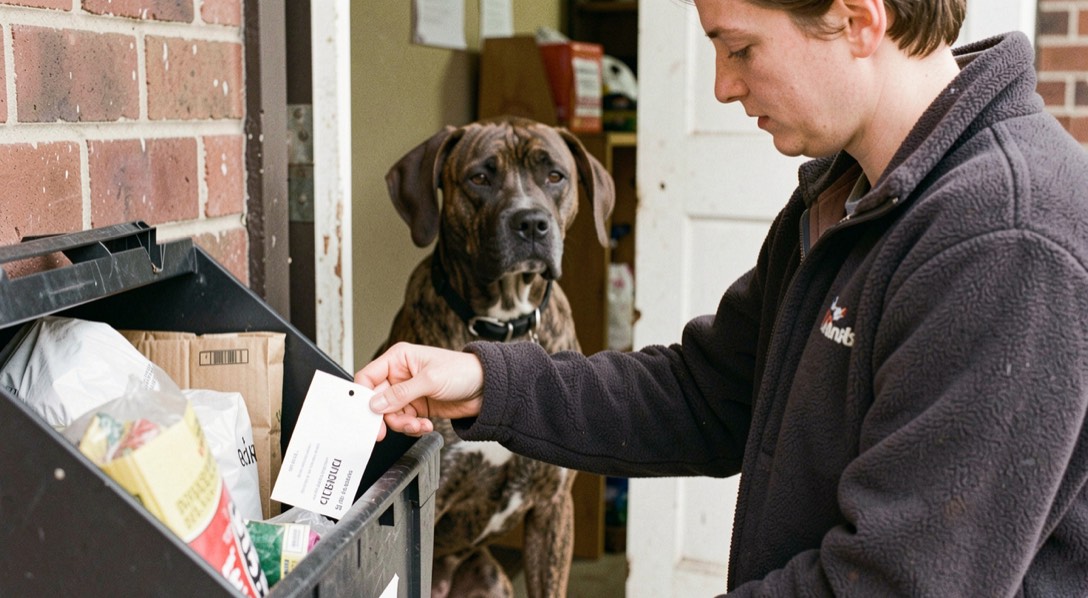
Not everyone who wants to help a shelter dog can bring one home. The lease forbids it, the hours are wrong, or the dog already asleep on the sofa would not accept a colleague. That is not a defect in your goodwill; it is the normal shape of it. A shelter does not need you to pretend otherwise. It needs the gestures that cost less than a spare room and still land, and there are enough of them to fill a year of Saturdays.
The ten minute gestures, done properly
The cheapest help is also the most wasted, because a gesture that costs nothing is usually made carelessly. Done properly, three of them move real outcomes. A well built share of an adoptable dog reaches a household that can act; a lazy one reaches only people who already follow shelters. A donation chosen off the shelter's own list frees money that would have bought paper towel; a surprise parcel consumes the store room. A stray report with the right details gets a dog home inside a day; a vague one opens a file that ends in a kennel.
Each of these is ten minutes and no more. The share that works, the wish list read before buying and the properly made stray report are the whole of this tier, and they are the gestures a shelter would trade a large gift for, precisely because they repeat.
A good share exists to reach a household that could adopt, which makes it worth knowing what adoption looks like from the inside. For the French speaking reader weighing that step, the everyday life of a companion dog is the whole beat of Caniblog, a practical notebook that follows the dog from puppy to senior with sourced answers and stated limits. Reading it now is a quiet way to find out whether next year is your year.
The afternoon that produces a thing
One rung up, half a day produces something the shelter can point at: a stack of kennel mats that survive the laundry, a folder of pictures that will carry the adoption pages for a year, a dog delivered two hundred kilometres closer to its foster home. None of it needs training. All of it needs you to accept that the shelter decides what is useful, and that the answer is sometimes no.
The bedding guide covers what the washing machine will and will not forgive. The transport leg is one hour of driving inside a relay of cars. The picture day helper holds leads, keeps the record and makes the photographer's day possible. Each produces a finished thing by dinner time, which is what separates an afternoon from a promise.
Help that repeats without a dog in the house
Beyond the afternoon sit the recurring gestures, the ones a shelter can put on a calendar. A monthly collection on your street is one fixed Saturday: the note through the neighbours' doors, the box on the porch, the delivery on the day everyone knows. An hour of weekday skill in the office, booked and bounded, is the help shelters ask for most and receive least.
A large charity's published role list shows how wide the real menu is. Dogs Trust, which rehomes dogs across Britain, advertises volunteer roles from event stalls and shop shifts to driving and home fostering on its volunteering pages; a small shelter's list will be shorter, but it will rhyme. The pattern worth copying is not the size of the menu. It is that every role on it is named, bounded and repeatable.
What each gesture actually changes
| Gesture | What it asks | What it changes for the shelter |
|---|---|---|
| A well made share | Ten minutes and a thought about who reads it | An adoption enquiry from a household that fits |
| A wish list delivery | A short shop and a quiet arrival | Money released for the veterinary line |
| A stack of washable bedding | An afternoon and a sewing machine | A week of clean kennels, then another |
| A transport leg | A car, an hour, two messages | A rescue move that happens at all |
| A picture day | A free afternoon and steady hands | Profiles that get read for the next year |
| A monthly collection | One fixed Saturday and a reminder note | A supply line the staff can plan on |
| An office hour | A trade you already have | The backlog nobody volunteers for |
Read the table as a staircase rather than a menu. Each rung assumes a little more of you than the one below, and each returns a little more certainty to the shelter. Where you stop is a question of your lease and your hours, not of your heart.
For the reader who will adopt eventually
Some readers of this page are not refusing adoption forever; they are refusing it this year, for a reason that will expire. The honest move is to help now and prepare quietly. The questions that begin on adoption day are everyday ones: the first nights, the change of food, the equipment that fits, the walk in bad weather, the vet visit that is only a check.
Preparing also means knowing what adoption asks of a house before the house is asked. The trial version of the commitment is emergency fostering, one dog for a few weeks with an exit planned from day one, and the deeper rehearsal is a season with one dog. Both leave the dog its way back; neither pretends to be adoption.
The honest limit
Everything on this page helps, and none of it is adoption. A shelter that runs on shares, bedding and volunteer hours still needs the dogs to leave, which is a problem only adopters solve. If the day comes when the lease, the hours and the house all say yes, the senior adoption guide is where the long version starts. Until then, the ten minute tier is not a consolation prize. Done every week, it is how a shelter stays open.