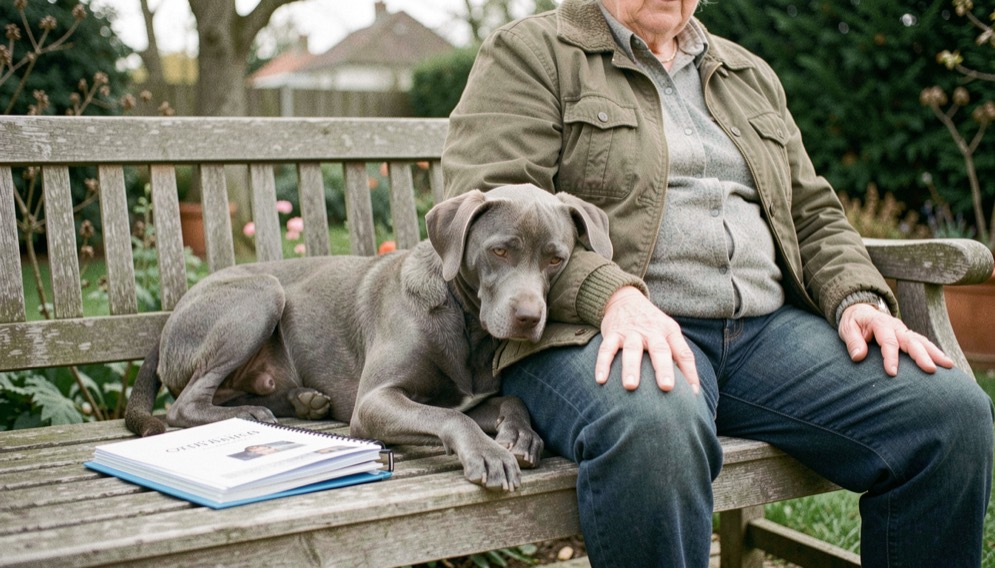
Adopting a senior dog is the gesture people praise most and examine least. It is presented as a kindness, which it is, and rarely as a decision with a budget, a timescale and an ending, which it also is. This page treats it as the second thing, because the seniors who go back to shelters go back for reasons that could have been foreseen at the kitchen table.
The honest arithmetic
Prices, veterinary rates and insurance rules differ so much between countries that any figure printed here would be wrong for most readers. What does not differ is the structure of the cost, so the useful thing is a list you can fill in with real local numbers before you decide. Ask the shelter and one local practice, write the answers down, and total them.
| Line | Ask whom | Why it changes with age |
|---|---|---|
| Adoption contribution | The shelter | Often reduced or waived for older dogs |
| Routine care each year | A local practice | Older dogs are seen more often, not less |
| Blood work before a dental or an anaesthetic | A local practice | Standard for older patients, and rarely anticipated |
| Long term medication | The shelter's vet, for this dog | Joints, heart, thyroid and pain relief are monthly, not one off |
| Dentistry | A local practice | The most common large bill in a newly adopted senior |
| Insurance, and what it excludes | An insurer, in writing | Age limits and pre existing exclusions decide whether cover is real |
| End of life care | A local practice | The line nobody asks about, and the one that must not be a surprise |
Then ask the harder question, which is not about money. How many years are you likely to have, what is your household's situation over that period, and what happens to the dog if your circumstances change. A senior adoption is a shorter commitment than a puppy and it is not a small one; a dog that is old on the day you take it may still be with you for years.
If the arithmetic does not work, that is a legitimate answer, and there is a version of this commitment that does not carry the veterinary risk: fostering, where the shelter keeps the medical responsibility.
Choosing the right senior
Old is not a temperament. Seniors arrive in shelters through bereavement, illness in the household, a move, a divorce, or because they were abandoned when they stopped being convenient, and those histories produce very different dogs. Ask which one this is, because a dog that lived in a family for ten years and a dog that was found on a road at ten are not the same adoption. The same questions hold when the adult is a recognisable breed rather than an obvious senior; adopting a purebred from a shelter walks through the file, the dog and the breed in that order.
Ask for the medical file and read it with a vet if you can. What you want to know is not whether the dog is healthy, because it is old and it is not, but whether its conditions are manageable, monitored and understood. A senior with a known, treated condition is often a far easier adoption than one with no history at all.
- Hearing and sight. Both fade, both are workable, and both change how you walk the dog and how it reacts to being approached while asleep.
- Mobility. Ask to walk the dog yourself, on the surface it will live on. Stairs and slippery floors decide more senior placements than anything else.
- Continence. A frequent and normal part of old age; ask, plan for it, and do not treat it as a training problem.
- Cognitive change. Night restlessness and confusion are common and manageable, and they are much harder if they arrive unannounced.
- Tolerance of other animals. An old dog that has to compete with a young one in the same house is being asked to do something unkind.
Visit more than once, at different times of day. Shelters are exhausting for old dogs, and the animal you meet at three in the afternoon after a noisy morning is not the one you will live with.
The first month
Bring the routine, not the excitement. An old dog moving house has lost its landmarks, and the fastest way to settle one is to make the new place boring and predictable: the same feeding times as the shelter used, the same food to begin with, a bed in a corner it can see the room from, and no visitors for a fortnight.
Make the physical environment work in the first week rather than the third. Non slip runners on hard floors, a ramp or a step at the car and the sofa, a bed away from draughts and off the floor if the dog is stiff, water on both levels of the house, and a night light if it is disoriented in the dark. These are small changes that prevent the falls and accidents that make people believe an old dog is failing.
Book the first veterinary appointment in the first fortnight, before anything is wrong, so that there is a baseline: weight, bloods if the practice advises it, a dental assessment, a pain assessment. Do not wait for a problem. In an old dog the difference between a manageable condition and a crisis is usually the date it was noticed.
Expect the dog to be quiet for a week and then to change. Many seniors sleep almost continuously for the first days and only start showing character in the second or third week, which surprises adopters who concluded on day three that the dog was dull or ill.
The vet rhythm
The practical difference between owning a young dog and an old one is that care becomes scheduled rather than reactive. Agree the rhythm with your vet at that first appointment and put it in a calendar: how often the dog is seen, what is checked each time, what is weighed, and what would justify an earlier visit.
Two habits do most of the work at home. Weigh the dog regularly, because unexplained weight loss is the earliest sign of most of the things that matter in old dogs. And watch for pain in its behavioural form rather than its dramatic one: a dog that has stopped jumping onto the sofa, that hesitates at stairs, that is grumpy when touched, that lies down differently, is usually in pain rather than becoming difficult. Pain in old dogs is under treated because it looks like age.
Finally, decide in advance what you will do at the end, and say it out loud to whoever shares the house. What treatment you would want, what you would refuse, what quality of life means for this dog, and who makes the decision if you cannot. Writing that down while the dog is well is the last and least discussed part of the commitment, and the people who have done it describe the ending as sad rather than chaotic.
None of this is a reason to take a puppy instead. It is the honest content of a decision that is usually described only in terms of virtue. The dog you are considering was probably made visible by somebody's season of work, described in coaching a long stay dog, and the shelter that got it to you is held together by the people in the coordinator's role.